Fresh or Preserved? How to Know Which Version of Your Sauce Will Taste Better
There's a moment most sauce-makers hit eventually. You've spent an afternoon building something genuinely great — roasted tomatoes, charred onions, a fistful of herbs — and then you taste it straight off the stove and think, this is good, but it could be better. Or the reverse happens: you crack open a jar you fermented three weeks ago and it's somehow deeper, more alive, and more interesting than anything you made fresh that week.
That gap — between fresh and preserved — isn't random. It's chemistry. And once you understand what's actually happening inside your sauce over time, you can make smarter decisions about when to eat it immediately and when to let it sit.
Why Freshness Is a Feature, Not a Default
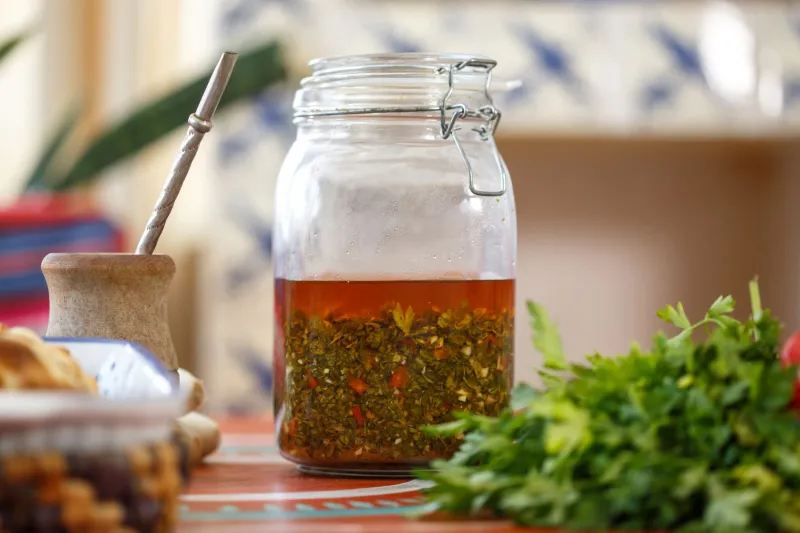
When most people think "fresh sauce," they picture something bright and light — a quick chimichurri, a pico de gallo, a pan sauce made to order. And they're right to associate freshness with those things. The volatile aromatic compounds in fresh herbs, citrus zest, and raw garlic are genuinely at their peak in the first few hours after you prepare them.
That's not a minor detail. Compounds like linalool in cilantro and eugenol in fresh basil begin degrading almost immediately when exposed to heat, oxygen, and time. If you're making a salsa verde or a gremolata, you're chasing those top notes — the green, grassy, sharp flavors that hit first on your palate. Preserving them would actually work against you.
Fresh sauces also benefit from textural contrast. A chunky avocado crema or a hand-cut herb sauce brings physical variety to a dish that a preserved version simply can't replicate. There's a reason great taco trucks make their salsas in small batches throughout the day rather than one big batch in the morning.
Sauces that almost always taste best fresh:
- Chimichurri and herb-forward condiments
- Fresh tomato salsas
- Citrus-based pan sauces
- Avocado-based preparations
- Light vinaigrettes with delicate oils
What Preservation Actually Does to Flavor
Here's where things get interesting. Preservation — whether through fermentation, pickling, slow cooking and canning, or even simple refrigerated aging — doesn't just stop a sauce from going bad. It actively transforms it.
Fermentation is the most dramatic example. When you lacto-ferment a hot sauce, wild bacteria convert sugars into lactic acid. That acid doesn't just preserve — it produces hundreds of new flavor compounds that weren't present in the raw ingredients. The heat becomes rounder, the funk adds depth, and the overall profile becomes something the original peppers couldn't deliver on their own. This is exactly why a well-made fermented hot sauce from a small producer hits so differently than a fresh-blended version of the same peppers.
Long-cooked and canned tomato sauces undergo similar transformations through the Maillard reaction and caramelization. Sugars break down, glutamates concentrate, and the sauce develops that rich, almost meaty quality that fresh tomatoes can't achieve. An Italian-American Sunday gravy that's been simmering for three hours isn't just cooked tomatoes — it's a chemically different product.
Even simple refrigerator aging changes things. A barbecue sauce left in the fridge for 48 hours will taste noticeably more integrated than the same sauce eaten immediately. The spices bloom, the acid mellows, and the sweetness stops tasting separate from everything else.
Sauces that genuinely benefit from time:
- Fermented hot sauces (minimum 2–4 weeks)
- Miso-based condiments
- Aged barbecue sauces and glazes
- Long-cooked tomato sauces
- Worcestershire-style complex condiments
- Pickled pepper-based sauces
The Practical Decision Framework
So how do you decide which path to take? It comes down to three questions.
What's the primary flavor driver? If your sauce is built around fresh, volatile aromatics — herbs, citrus, raw alliums — eat it soon. If it's built around fermentable sugars, capsaicin, or deep umami ingredients, give it time.
What's the occasion? A weeknight dinner calls for something you can make and eat in the same session. A weekend project, a gift, or a sauce you want to have on hand for months is a candidate for preservation.
What's your heat tolerance? Not heat as in spice — heat as in cooking. Some sauces lose everything when you cook them. Others need extended heat to reach their potential. Knowing this upfront saves you from ruining something delicate or underdeveloping something that needed more time on the stove.
A Real-World Taste Test
We ran an informal comparison with a batch of roasted red pepper sauce. Version one was blended and served immediately with a splash of sherry vinegar and fresh thyme. Version two used the same base, fermented for three weeks at room temperature, then finished with the same vinegar and thyme.
The fresh version was brighter, more immediately appealing, and had a clean pepper-forward character. The fermented version was slower to reveal itself — initially more sour and funky — but by the second bite it had a complexity that the fresh version simply didn't. Neither was objectively better. They were genuinely different sauces that would serve different purposes.
That's the real answer to the fresh-versus-preserved debate. It's not a competition. It's a decision about what kind of flavor experience you're trying to create and when you need to create it.
Building Both Into Your Routine
The most capable sauce-makers keep both approaches active at the same time. There's always something fermenting or aging, and there's always the ability to make something fresh in twenty minutes. These aren't competing strategies — they're complementary ones.
A good starting point: pick one sauce you currently make fresh and try a preserved version of it. Ferment your standard hot sauce for a month before tasting it. Let your barbecue sauce sit for two days before serving it. Age your teriyaki-style glaze in the fridge for a week.
You'll develop an intuition quickly. And once you understand what time does to a sauce, you'll stop thinking of preservation as a storage solution and start thinking of it as a flavor tool — which is exactly what it is.