Big Flavor, Small Budget: How Everyday Pantry Staples Can Build Seriously Complex Sauces
There's a persistent myth floating around home cooking circles that great sauces require great ingredients — meaning expensive ones. Aged balsamic. Fancy imported chiles. High-end miso from a specialty shop. And sure, those things are lovely if you've got the budget and the access.
But here's what professional cooks know that most home kitchens haven't caught up to yet: technique creates more flavor than price tags do. A $2 can of tomatoes handled with skill and patience will outperform a $9 jar of imported passata that gets dumped cold into a pan and barely simmered.
Let's talk about how to actually do that.
The Real Currency of Sauce: Technique, Not Ingredients
Depth in a sauce isn't something you buy — it's something you build. And the building blocks are mostly already in your pantry. Onions. Garlic. Canned tomatoes. Dried spices. Vinegar. Soy sauce. Olive oil. These aren't boring fallbacks. They're loaded with flavor potential that most people never fully unlock because they skip the steps that matter.
The three techniques that do the heaviest lifting? Toasting, caramelizing, and sequential layering. Master these and your sauces will start tasting like something you'd pay $18 for at a restaurant.
Toasting: The Free Flavor Upgrade
Dried spices sitting in your cabinet are essentially sleeping. The aromatic compounds that make cumin smell like cumin, or coriander smell like coriander, are locked in place until heat wakes them up. Toss them dry into a warm pan for 60 to 90 seconds before you do anything else and you'll release a wave of volatile oils that deepens the entire sauce's character from the very first step.
This works for whole spices, ground spices, dried chiles, and even tomato paste. Yes — tomato paste. Cooking it directly in oil or fat for two to three minutes before adding any liquid transforms it from a sharp, slightly metallic concentrate into something rounder, richer, and almost sweet. It's one of the cheapest and most effective tricks in sauce building, and it costs you nothing but a little attention.
Caramelizing: Patience Pays Off
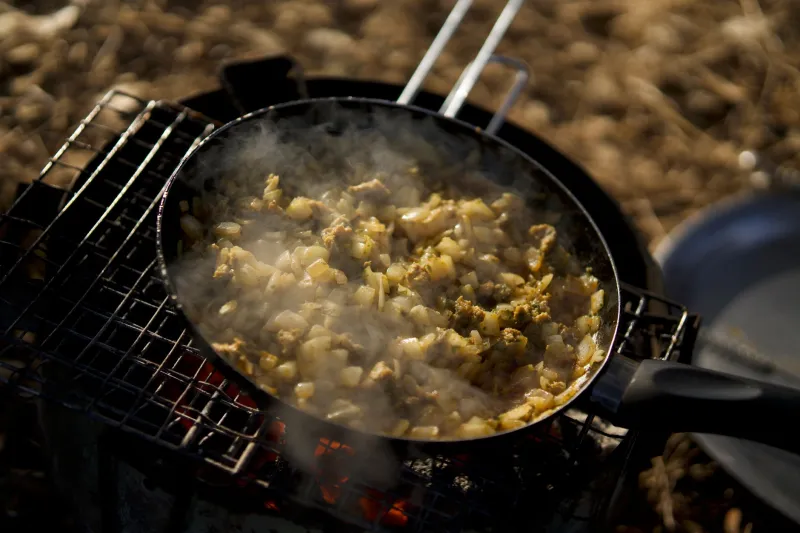
Onions are practically free. A large yellow onion runs you maybe 50 cents. But if you're willing to cook that onion low and slow for 25 to 35 minutes — stirring occasionally, letting it soften, then color, then deepen — you end up with something that tastes like it belongs in a French bistro.
Caramelized onions aren't just a topping. They're a sauce foundation. Blend them into a tomato base and you get a silky, naturally sweet depth that no amount of added sugar can replicate. Stir them into a pan sauce and they do the work of deglazing and building body simultaneously.
The same principle applies to garlic, shallots, and even bell peppers. Low heat, time, and patience convert sugars into complexity. You're essentially doing flavor alchemy with a $1 vegetable.
Sequential Layering: The Professional's Approach
Here's where a lot of home cooks lose ground. They add everything to the pot at once — aromatics, spices, liquids, all of it — and then wonder why the sauce tastes flat despite having a dozen ingredients.
Sequential layering means adding ingredients in deliberate order, allowing each component to develop before introducing the next one. Start with fat and aromatics. Let the onions soften before the garlic goes in. Add spices after the aromatics are fragrant, not before. Introduce acid (vinegar, tomato, citrus) after the base is established, not at the start where it can inhibit browning.
This isn't complicated. It's just patient. And the payoff is a sauce where each ingredient has its own presence — where you can actually taste the individual contributions rather than a muddy, indistinct blend.
Budget Ingredients That Punch Way Above Their Weight
A few specific pantry items worth highlighting:
- Fish sauce: A small bottle costs around $3 and adds a fermented umami backbone that's almost impossible to trace but impossible to replicate with anything else. Use it sparingly in tomato sauces, stir-fry sauces, or anything that needs savory depth.
- Soy sauce: Beyond Asian applications, a splash of soy sauce in a pan sauce or a braising liquid adds color, salt, and umami in one move.
- Apple cider vinegar: Bright, slightly fruity, and far more interesting than white vinegar in most sauce contexts. A bottle runs about $3 and lasts forever.
- Dried chiles (anchos, guajillos, chipotles): These are some of the most underused ingredients in American home kitchens. Toast them, rehydrate them, and blend them into sauces for a smoky, layered heat that no bottled hot sauce can replicate.
- Miso paste: Even the basic grocery store variety adds fermented complexity to dressings, glazes, and braises. A little goes a long way.
Putting It Together: A Real-World Example
Let's say you're making a weeknight tomato sauce with a $1.29 can of crushed tomatoes. Here's the difference between a flat sauce and a great one:
Flat approach: Heat oil, add garlic, dump in tomatoes, simmer 15 minutes, season.
Layered approach: Heat olive oil over medium. Add diced onion and cook until deeply golden — 20 minutes minimum. Add a pinch of red pepper flakes and let them bloom for 30 seconds. Add tomato paste and cook it in the oil until it darkens slightly, about 2 minutes. Add garlic for just 60 seconds. Add a splash of red wine or red wine vinegar and let it cook off. Add tomatoes and simmer low for at least 30 minutes, stirring occasionally. Finish with a small knob of butter and a tiny splash of fish sauce.
Same base ingredients. Completely different result.
The Takeaway
The gap between a grocery store sauce and a restaurant-quality one isn't filled with expensive ingredients. It's filled with technique, timing, and a willingness to slow down. Your pantry already has most of what you need. The question is whether you're using it right.