Capsaicin Chemistry: How to Build Heat That Actually Works in Your Homemade Hot Sauce
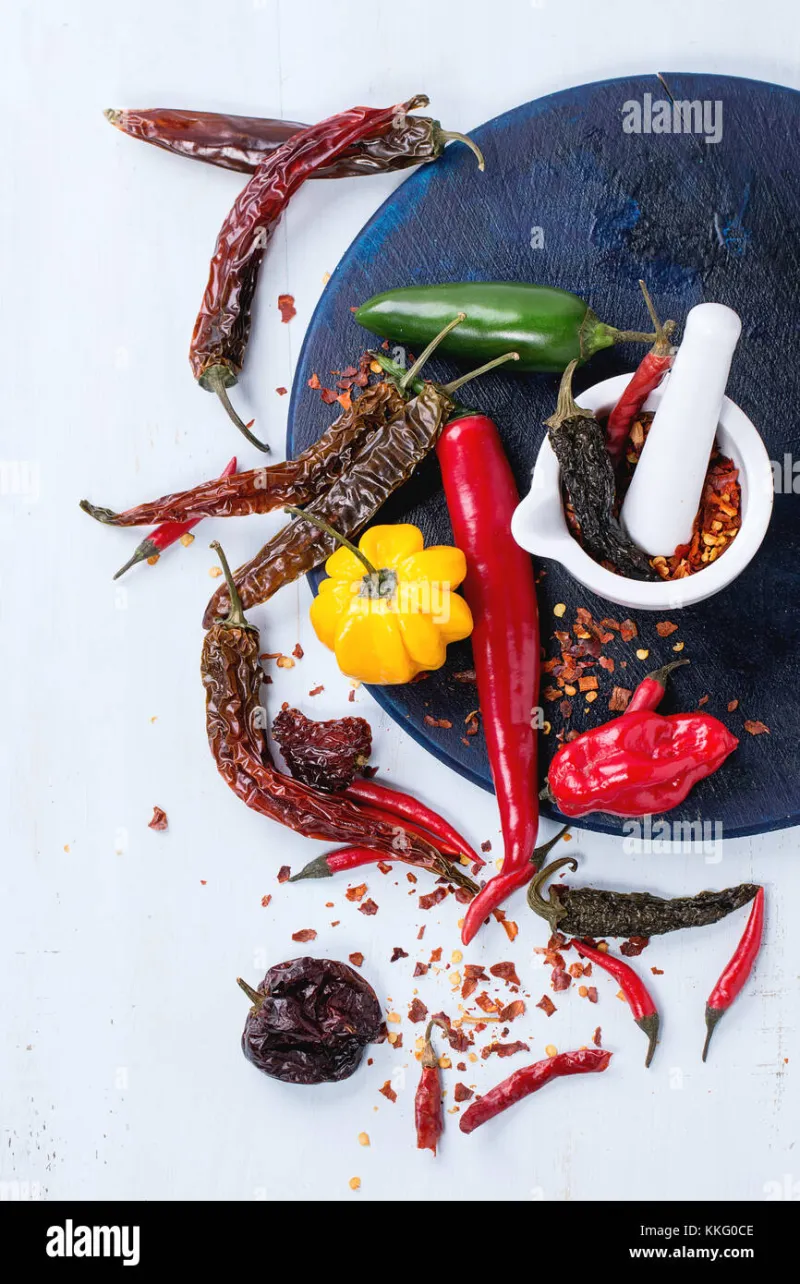
Photo: assorted fresh dried and fermented chili peppers on wooden cutting board, via c8.alamy.com
There's a big difference between a hot sauce that makes you reach for a glass of milk and one that makes you reach for the bottle again. That difference isn't luck — it's chemistry. And once you understand what's going on at a molecular level when you're working with chili peppers, you'll stop guessing and start crafting heat with real intention.
This isn't a biology lecture. Think of it as the kind of conversation you'd have with a friend who happens to have a food science degree and makes killer hot sauce on weekends. Let's dig in.
What Capsaicin Actually Does to You
Capsaicin — the compound responsible for the burn in chili peppers — doesn't actually cause physical damage to your mouth. What it does is bind to a receptor called TRPV1, which your nervous system uses to detect actual heat (like touching a hot pan). So your brain receives a signal that says "this is hot" even though nothing is literally burning. It's a chemical illusion, and it's a pretty impressive one.
The intensity of that illusion is measured in Scoville Heat Units (SHU). A jalapeño clocks in around 2,500–8,000 SHU. A habanero jumps to 100,000–350,000. Ghost peppers? Over a million. But raw numbers don't tell the whole story when you're building a sauce, because heat perception changes dramatically depending on how you prepare and combine your peppers.
Fresh vs. Dried vs. Fermented: A Flavor-Heat Breakdown
Not all chili pepper formats are created equal, and knowing when to use each one is one of the most underrated skills in sauce making.
Fresh peppers deliver bright, vegetal heat. The capsaicin is present but it's accompanied by a lot of water content and volatile aromatic compounds that give your sauce that clean, green, almost grassy quality. Think of a fresh serrano salsa verde — the heat hits fast and fades relatively quickly.
Dried peppers are a different beast entirely. When you dry a chili, you're concentrating everything — the capsaicin, the sugars, the earthy compounds. Dried anchos, guajillos, and chipotles have layered, almost chocolatey depth that fresh peppers simply can't replicate. The heat tends to be slower to develop and more persistent. This is why so many classic American hot sauces and barbecue-adjacent condiments lean heavily on dried and smoked varieties.
Fermented peppers are where things get really interesting. Lacto-fermentation doesn't just preserve peppers — it transforms them. The lactic acid produced during fermentation softens the sharpness of raw capsaicin, creating a rounder, more complex heat that integrates into the overall sauce rather than sitting on top of it. The funk, the acidity, the umami — fermentation builds a scaffold that heat can live inside rather than dominate.
For small-batch makers, blending all three formats is a powerful move. A sauce built on a fermented pepper base, finished with a dried chili for body and a touch of fresh pepper for brightness, hits multiple layers of the palate in a way that single-source sauces rarely do.
Heat Stability: What Cooking Does to Capsaicin
Here's something that surprises a lot of home cooks: capsaicin is remarkably heat-stable. Unlike many aromatic compounds that cook off quickly, capsaicin doesn't significantly degrade at normal cooking temperatures. You're not going to simmer your sauce mild by accident.
What cooking does change is the perception of heat. When you roast or caramelize peppers, you develop sugars and Maillard reaction compounds that add sweetness and depth — and those flavors act as a counterbalance to the heat. The sauce isn't less spicy, but it tastes more balanced because there's more going on.
Acidity also plays a major role. Vinegar, citrus juice, and fermented brine all interact with capsaicin in ways that affect how your palate experiences the heat. Higher acid environments can actually make heat feel more immediate and sharp. Lower acid sauces often let heat build more slowly. This is why adjusting your vinegar ratio isn't just about flavor — it's a heat calibration tool.
Fat, meanwhile, is capsaicin's kryptonite. Since capsaicin is fat-soluble (not water-soluble — that's why water doesn't help when your mouth is on fire), incorporating oils, dairy, or nut-based ingredients into your sauce will physically bind to capsaicin molecules and reduce the intensity you perceive. A drizzle of olive oil in a blended hot sauce isn't just for texture. It's chemistry.
Practical Tips for Dialing In Your Heat Level
Armed with all of this, here's how to approach heat management in your own small-batch sauces:
Start with the seeds — or don't. The majority of capsaicin in a pepper lives in the white pithy membrane, not the seeds themselves (though seeds do carry some). Removing the membrane gives you more control over heat without sacrificing pepper flavor. Keep it in when you want the full burn.
Toast your dried peppers before using them. A quick dry toast in a skillet wakes up the oils in dried chilies and adds a smoky, roasted dimension. Just don't let them burn — scorched peppers turn bitter fast.
Taste your ferment before you blend. Fermented pepper mash can vary in heat and acidity depending on how long it's been going and what your pepper ratios were. Always taste first and adjust your other ingredients accordingly.
Add heat in stages. Don't dump all your chili in at once. Build in layers — a base of fermented mash, a mid-cook addition of dried pepper, a finishing hit of fresh or powdered chili — and taste as you go. You can always add heat. You can't take it away.
Let your sauce rest. Freshly made hot sauce almost always tastes different after 24–48 hours in the fridge. The flavors meld, the acid mellow, and the heat redistributes throughout the sauce. Patience is part of the recipe.
The Bigger Picture
Crafting a great hot sauce isn't about going as hot as possible. It's about building heat that serves the sauce — heat that enhances the other flavors rather than steamrolling them. Understanding the science gives you the control to make that happen intentionally, every single time.
At Sauce Gardner, we believe every drop should be purposeful. And when you know why capsaicin behaves the way it does across different pepper forms and preparation methods, you stop making hot sauce by accident and start making it by design. That's when things get really good.