Five Sauce Projects Every Home Cook Should Tackle Before Anything Else
There's a particular kind of frustration that hits when you've decided to get serious about homemade sauces. You've got ambition. You've got jars. You might even have a mandoline you haven't opened yet. But standing in front of a pantry full of possibilities, the question that always surfaces first is: where do I actually begin?
Not every sauce is created equal as a learning tool. Some are forgiving and fast, great for building confidence. Others demand precision that only makes sense once you've already got a few wins under your belt. This guide is about sequencing — figuring out which five projects will teach you the most, the fastest, without sending you down a rabbit hole that ends in a scorched pot and a takeout order.
1. A Classic Vinaigrette (Yes, Really)
Hear us out before you skip this one. A vinaigrette isn't just a salad dressing — it's your first real lesson in emulsification, the process of convincing fat and water-based liquids to coexist in a stable, silky blend. That's a skill you'll use constantly in more complex sauces.
Start with a ratio of three parts oil to one part acid (more on ratios in another piece — it's its own universe). Use a good Dijon mustard as your emulsifier and play with the acid: red wine vinegar, apple cider vinegar, lemon juice. Each gives you a completely different result. Once you can make a vinaigrette that holds together and actually tastes balanced, you've got the foundation of French-style pan sauces, aioli, and a dozen other classics.
Skill level: Complete beginner. Equipment needed: A jar with a lid or a blender. What it teaches: Emulsification, acid-fat balance, seasoning by taste.
2. A From-Scratch Tomato Sauce
This might feel basic, but a real, properly built tomato sauce — one where you bloom your aromatics in olive oil, add your tomatoes at the right moment, and let it reduce patiently — is one of the most instructive things you can cook. It teaches you about layering flavor over time, which is something no shortcut can replicate.
Start with canned San Marzano tomatoes (they're widely available at most US grocery stores and worth the extra dollar or two). Don't rush the onion and garlic. Let the sauce reduce until it looks almost too thick, then pull it. You'll start to understand how heat, time, and evaporation change a sauce's personality entirely.
Skill level: Beginner to intermediate. Equipment needed: A heavy-bottomed saucepan or Dutch oven. What it teaches: Flavor layering, reduction, aromatic development.
3. A Simple Fermented Hot Sauce
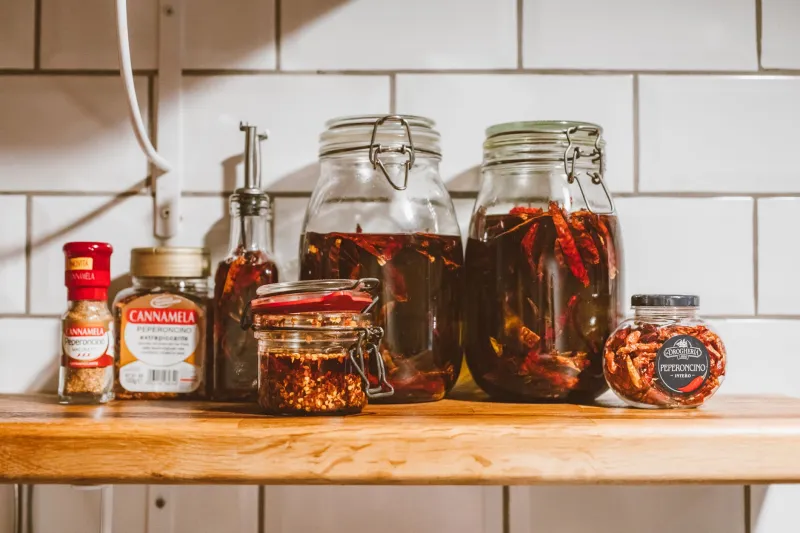
Fermentation sounds intimidating, but a basic lacto-fermented pepper sauce is genuinely one of the more hands-off projects on this list. You're mostly letting time and salt do the heavy lifting. What makes it valuable as an early project is that it introduces you to the concept of living sauces — ones where flavor continues to develop after you've technically finished making them.
Blend fresh chiles (jalapeños, serranos, or a mix), salt at around 2% of total weight, and pack everything into a clean jar. In five to seven days at room temperature, you'll have something tangy, complex, and entirely your own. It also gives you your first real brush with pH, safety, and fermentation monitoring — concepts that matter a lot as you get deeper into sauce-making.
Skill level: Beginner (with attention to detail). Equipment needed: A kitchen scale, mason jars, a blender. What it teaches: Fermentation basics, salt ratios, patience.
4. A Pan Sauce Built From Drippings
If you've ever roasted a chicken or seared a steak and poured the drippings down the drain, we need to talk. Those brown bits stuck to the bottom of your pan — the fond — are concentrated flavor, and a pan sauce is how you turn them into something extraordinary in about four minutes.
Deglaze with wine or broth, scrape up everything, reduce, add a cold pat of butter at the end, and swirl. That last step — monter au beurre, if you want to get technical — is what gives restaurant sauces their glossy, coating texture. It's a technique that transfers to dozens of other applications, from finishing pasta sauces to enriching braises.
Skill level: Intermediate. Equipment needed: A skillet (stainless or cast iron works best — avoid nonstick for this). What it teaches: Fond usage, deglazing, butter mounting, sauce consistency.
5. A Homemade Mayonnaise
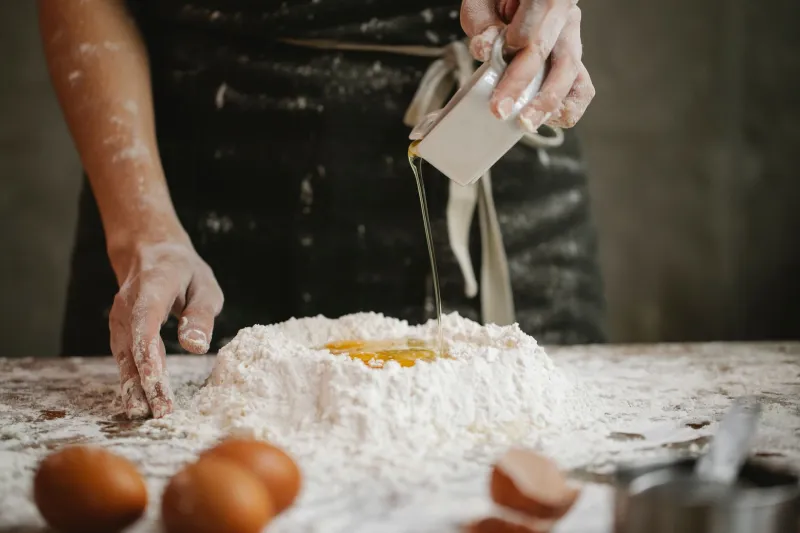
Mayonnaise is the final boss of this starter sequence, and it earns that spot. It's an emulsification project like vinaigrette, but with higher stakes: you're working with raw egg yolk, and the margin for error is narrower. Get it right, and you'll never look at a jar of Duke's or Hellmann's the same way again.
Add your oil drop by drop at first — genuinely, slower than feels necessary — while whisking constantly. Once the emulsion is established, you can pour more steadily. Season with lemon juice, a little mustard, salt. From here, you're a few steps away from aioli, rouille, tartar sauce, and every creamy condiment in between.
Skill level: Intermediate. Equipment needed: A bowl and whisk, or an immersion blender for the foolproof method. What it teaches: Advanced emulsification, patience, ratio precision.
Choosing Your Starting Point
If you've never made a sauce from scratch, start with the vinaigrette. If you've got some basic cooking confidence but haven't ventured into fermentation or technique-driven cooking, pick the fermented hot sauce or the tomato sauce. The pan sauce and mayo are best tackled once you're comfortable with heat control and have a feel for how sauces behave on the stove.
The order matters less than the progression. Each of these projects builds something the next one relies on — emulsification leads to mayo, patience learned in tomato sauce pays off in fermentation, and the control you develop making pan sauces shows up in everything that comes after.
Sauce Gardner exists for exactly this kind of journey. Start somewhere. Make something. And when it doesn't work perfectly the first time, that's the lesson doing its job.