When to Spend More on Sauce Ingredients (And What's Not Worth the Upgrade)
There's a version of this conversation that gets preachy fast. The one where someone tells you that you must use Calabrian chiles and single-origin white soy and hand-harvested fleur de sel or your sauce will never be truly great. That's not this conversation.
The truth about ingredient upgrades is more nuanced and, honestly, more useful: quality matters, but it matters differently depending on what you're making and how developed your palate and technique already are. Spending $22 on a bottle of aged sherry vinegar before you've figured out how to balance acid in a sauce is a little like buying a professional camera before you've learned how exposure works.
This guide is about sequencing your ingredient investments — knowing which upgrades are genuinely transformative and which ones can wait until you've grown into them.
Start Here: The Non-Negotiables at Every Level
Before we talk about upgrades, it's worth establishing the floor. Regardless of skill level, a few ingredient choices have an outsized impact on sauce quality and are worth prioritizing from day one.
Kosher salt over iodized table salt. This isn't a luxury purchase — a box of Diamond Crystal costs about the same as a canister of Morton table salt. But kosher salt's coarser grind gives you much more control when seasoning by feel, and it doesn't have the faint metallic edge that iodized salt can introduce into delicate sauces.
Whole spices over pre-ground. A bag of whole cumin or coriander seeds is usually cheaper per ounce than the pre-ground version and stays flavorful far longer. Toast them dry in a skillet for 90 seconds and grind them just before use — the difference in your sauces is immediate and significant.
Real citrus over bottled juice. Bottled lemon and lime juice taste like a memory of the real thing. Fresh citrus is cheap, and the brightness it adds to sauces is irreplaceable.
These aren't upgrades. They're baselines. Get them in place first.
The Early-Stage Upgrade: Vinegar
If you're making your first foray into from-scratch sauces and want one ingredient investment that will pay off across dozens of recipes, spend it on better vinegar.
The standard grocery-store options — generic red wine vinegar, white distilled — do the job, but they're one-dimensional. A quality apple cider vinegar (look for raw, unfiltered versions from brands like Bragg) has a softer acidity and a subtle fruitiness that works beautifully in BBQ sauces, hot sauces, and vinaigrettes. A decent aged balsamic — not the $4 bottle, but the $12-to-15 range that's actually been aged — adds a syrupy depth to glazes and reductions that cheap balsamic simply can't replicate.
At this stage, skip the very expensive stuff. A $40 bottle of 25-year aged balsamic from Modena is a genuinely spectacular product, but you'll get more value from it once your palate is trained to detect what it's contributing.
Mid-Level Upgrades: Oils and Fermented Ingredients
Once you're comfortable with basic sauce construction and can reliably produce balanced results, it's time to think about oils and fermented additions.
Finishing olive oils are different from cooking olive oils, and the distinction matters in sauce-making. A quality California-grown extra virgin olive oil used as a finishing drizzle or in an uncooked sauce (like a simple herb sauce or salsa verde) will taste dramatically different from the refined blended oils most people cook with. Look for bottles with a harvest date — freshness is everything with good olive oil.
Fermented condiments — real fish sauce, Korean doenjang, Japanese white miso, Worcestershire from a producer that still uses anchovies — add umami complexity that synthetic alternatives can't match. These ingredients are widely available at most US Asian grocery stores and increasingly at mainstream retailers. A small jar of white miso ($5 to $8) will transform your vinaigrettes, marinades, and butter-based sauces in ways that are hard to explain until you've tasted it.
What's not worth upgrading yet: specialty finishing salts, exotic pepper varieties, or single-estate spices. Your technique needs to be consistent enough to actually taste the difference those provide.
Advanced Pantry Investments: When You're Ready to Really Taste the Difference
At the point where you're making sauces regularly, troubleshooting confidently, and developing a genuine palate for nuance, a few higher-end investments start making sense.
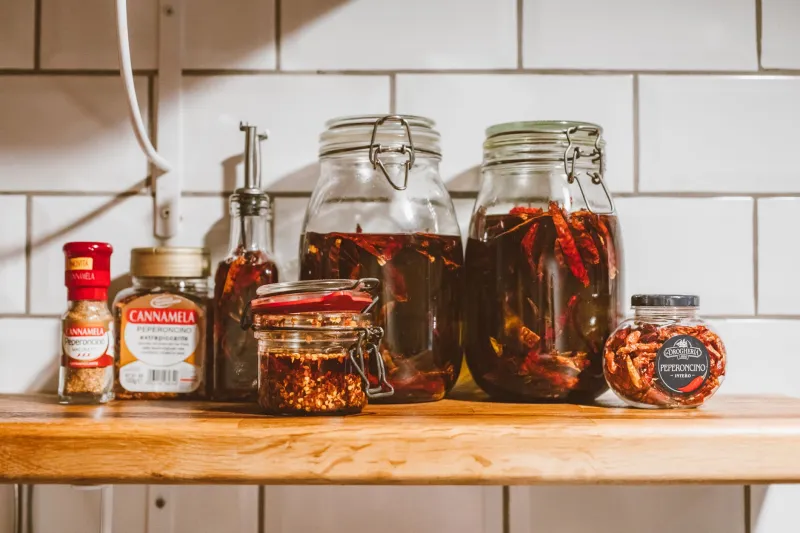
Premium dried chiles sourced from specialty producers (Rancho Gordo is a great US-based option) have flavor complexity that grocery-store versions rarely match. The difference between a supermarket ancho chile and one that was dried properly and stored well is noticeable in any mole or chile-forward sauce.
Aged sherry vinegar and champagne vinegar open up sauce dimensions that wine and cider vinegars don't reach. Sherry vinegar has a nutty, oxidative quality that's extraordinary in pan sauces and Spanish-inspired condiments. Champagne vinegar is delicate enough to use in applications where other vinegars would overpower.
Specialty soy sauces — tamari for gluten-free cooking, white soy (shiro shoyu) for applications where you want umami without color, aged shoyu for depth — are genuinely different products, not marketing variations. If soy-forward sauces are part of your regular rotation, these are worth exploring.
The Upgrade That's Almost Never Worth It
Premium salt — specifically, the very expensive finishing salts like Maldon flakes or Hawaiian black salt — is lovely on a finished dish but largely wasted inside a sauce where it dissolves completely and loses its textural character. Save the beautiful salt for the table. Season your sauces with kosher salt.
The same logic applies to expensive vanilla and saffron in contexts where they're cooked for a long time — heat degrades their most delicate compounds, and you won't taste what you paid for.
Upgrade With Intention
The best pantry is one that evolves with you. Start with the fundamentals, get your technique solid, and add specialty ingredients one at a time so you can actually hear what they're contributing to your sauces. That's how you build a pantry that reflects your cooking — not one that's full of impressive jars you don't quite know how to use yet.